
Towards Intelligent Web Context-Based Content On-Demand Extraction Using Deep Learning
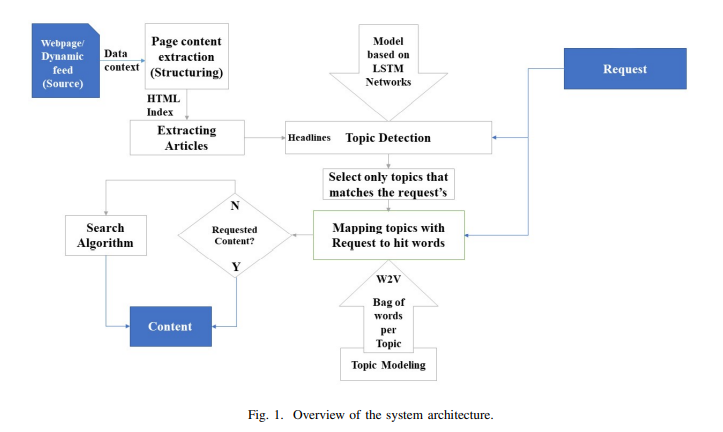
Information extraction and reasoning from massive high-dimensional data at dynamic contexts, is very demanding and yet is very hard to obtain in real-time basis. However, such process capability and efficiency might be affected and limited by the available computational resources and the consequent power consumption. Conventional search mechanisms are often incapable of real-time fetching a predefined content from data source, without concerning the increased number of connected devices that contribute to the same source. In this work, we propose and present a concept for an efficient approach
Transmit and receive cooperative cognition: Protocol design and stability analysis
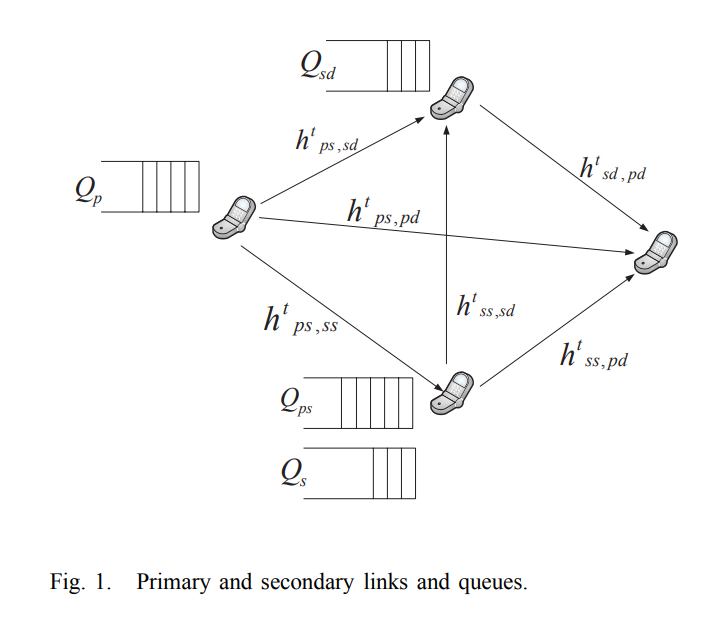
In this paper, we investigate the stability of a cooperative cognitive system. We propose a cooperative secondary transmitter-receiver system (CSTR), where, the secondary transmitter (ST) and the secondary receiver (SR) increase the spectrum availability for the ST packets by relaying the unsuccessfully transmitted packets of the primary transmitter (PT). We assume receiving nodes with multipacket reception capability (MPR). We provide two inner bounds and two outer bounds on the stability region of the considered system. © 2013 ICST - The Institute for Computer Sciences, Social Informatics
Self-Driving Car Lane-keeping Assist using PID and Pure Pursuit Control
Detection of lane boundaries is the primary role for monitoring an autonomous car's trajectory. Three lane identification methodologies are explored in this paper with experimental illustration: Edge detection, Hough transformation, and Birds eye view. The next step after obtaining the boundary points is to add a regulation rule to effectively trigger the regulation of steering and velocity to the motors. A comparative analysis is made between different steering controllers like PID or by using PID with a pure pursuit controller for the Lane Keeping Assist (LKA) system. A camera that sends
Regression Modeling for the Ventilation Effect on COVID-19 Spreading in Metro Wagons
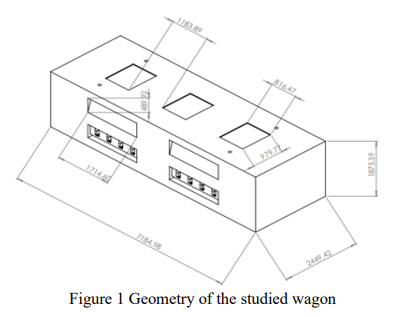
The effect of different ventilation parameters on the infection potential of COVID-19 in a metro wagon is numerically studied. Two key indicators are used to quantify this potential. Based on the numerical results a regression analysis is performed to come up with the most suitable regression model for these key parameters. The proposed regression models are helpful in quantifying the infection risk at different ventilation scenarios. © 2021 IEEE.
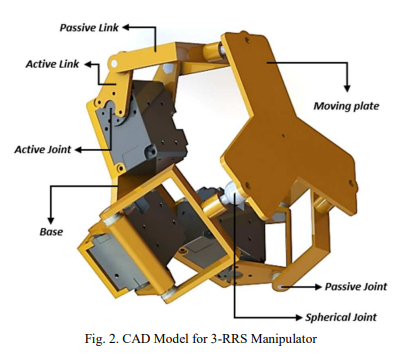
Design, simulation, and kinematics of 9-DOF Serial-Parallel Hybrid Manipulator Robot
Serial manipulator robot is one of the most advanced robots in the last decade. The demand for this type of robot leads the researchers to develop and improve the robot to increase its workspace, speed and to minimize the control complexity. This paper presents a novel robot configuration that combines a 6 DOF serial manipulator with a 3 DOF spherical parallel wrist. The serial manipulator is KUKA kr6 R900 type, which is a real industrial robot. At the same time, the parallel spherical wrist is 3-RRS type (Revolute- Revolute-Spherical Joint), which can support one translation movement in the Z
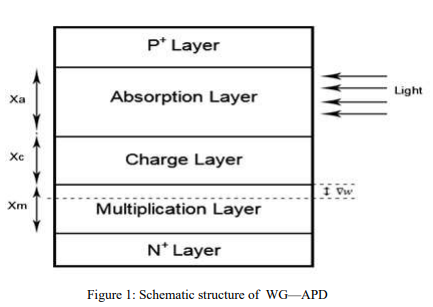
A Stochastic Modeling of the Gain in Waveguide Avalanche Photodetectors (WG-APDs)
Waveguide photodetectors are considered as a promising candidate for high speed photodetection where the tradeoff between the transit time bandwidth and the quantum efficiency is overcome as the incident optical signal and the photogenerated carriers move in perpendicular directions. In WG-Avalanche Photodetectors (WG-APDs), the avalanche multiplication gain enhances the photocurrent of the photodiodes. In these photodiodes, the inaccuracies in the ionizations coefficients of the photogenerated electrons and holes and in the dimensions of the multiplication layer affect the multiplication gain
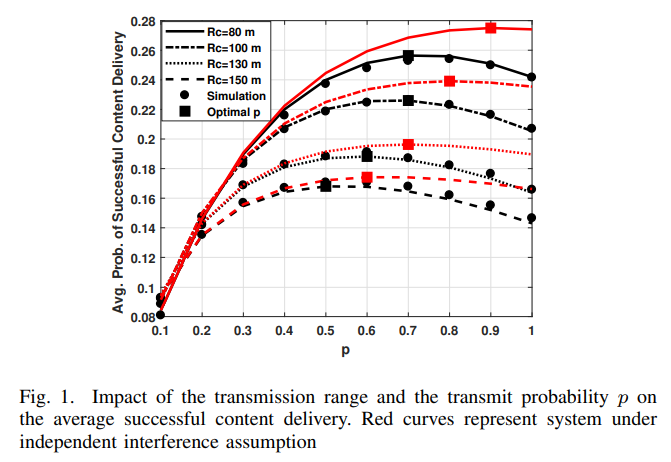
Impact of Temporally Correlated Nakagami-m Interferers in D2D Cache-Aided Networks
In this paper, we exploit tools from stochastic geometry to characterize the average probability of successful content delivery in a cache-enabled device-to-device (D2D) network under Nakagami- m fading. Specifically, we focus on the impact of temporal interference correlation due to erroneous packets retransmissions. The aggregate network interference is characterized under a slotted Aloha scheme in a homogeneous Poisson field of static interferers. In addition, the effect of different system parameters, such as the content popularity, intensity of devices, and D2D communication range, on the
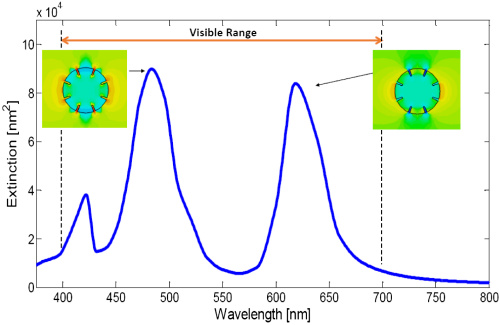
Enhanced plasmonic photovoltaic using embedded novel gear-shaped nanoparticles
In this paper, novel gear-shaped nanoparticles are introduced for the first time to enhance the photovoltaic (PV) efficiency. This has been achieved via increasing the overall power absorption by the PV semiconductor material in both visible and near-infrared ranges. The modes of the new gear-shaped nanoparticles are investigated. A parametric study has been performed which demonstrates how the design parameters of the proposed nanoparticles can be engineered for best overall power absorption within a Si surrounding medium. A figure of merit (FoM) is defined that takes into account all

Review organic solar cells parameters extraction and characterization techniques
Organic photovoltaic research is continuing in order to improve the efficiency and stability of the products. Organic devices have recently demonstrated excellent efficiency, bringing them closer to the market. Understanding the relationship between the microscopic parameters of the device and the conditions under which it is prepared and operated is essential for improving performance at the device level. This review paper emphasizes the importance of the parameter extraction stage for organic solar cell investigations by offering various device models and extraction methodologies. In order
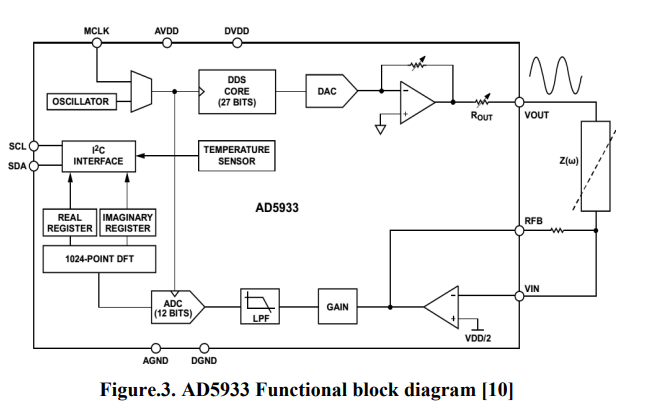
Aging effect on apples bio-impedance using AD5933
In this paper, the effect of the fruits aging on bio-impedance is experimentally studied. Bio-impedance analysis, as accurate and fast method is used to investigate and monitor group of apples properties during aging. This method provides an alternative method for investigating apples physical properties that are highly related to chemical properties. AD5933 impedance analyzer chip within the frequency range (5 KHz-100 KHz) and NI-ELVIS board within the frequency range (300 Hz-5 KHz) are used to investigate the changes in apple's properties during aging. According to experimental results, the